Long hours. Burnout. Fatigue. For many veterinarians, these challenges are all too familiar, and they can make the transition to hospital ownership feel daunting. After all, if you’re already in a crunch, how could you possibly fit in the workload of running a business on top of everything else?
The truth is, ownership can actually relieve a lot of the pressure veterinarians feel. As an independent vet, you get to build your practice around your values, choose your team, set your goals and control how you practice medicine. Ownership can be an incredibly fulfilling and rewarding career move, even before you consider the increased earning potential.
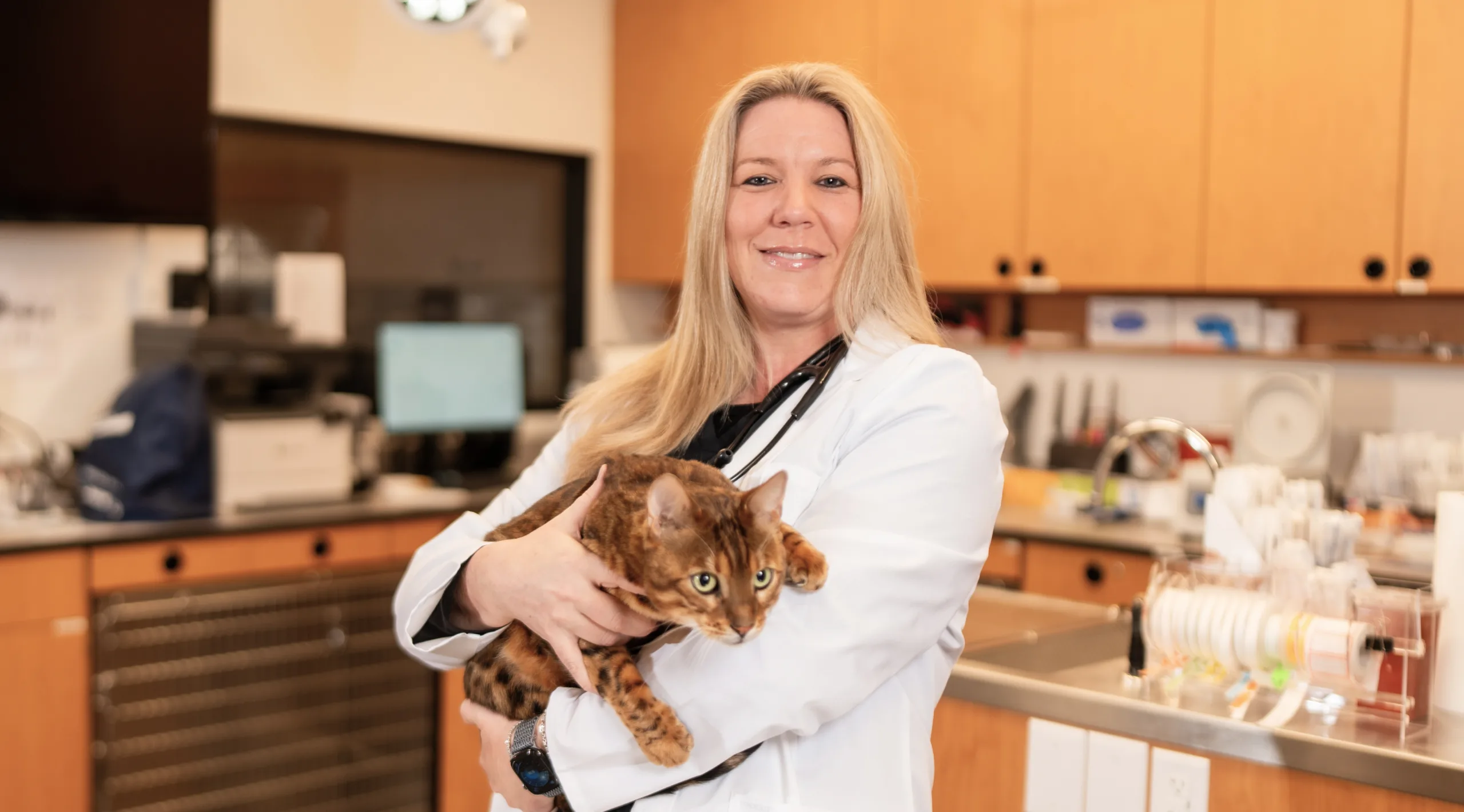
For Dr. Katie Manning of PetSmart Veterinary Services Southern Pines, ownership has allowed her to bring her passion to the job every day. We spoke with her about her daily routine, caseload, leadership role and administrative duties to bring you a look into the average day of a veterinary hospital owner and help you decide if ownership is right for you.
PVS: Before you head to the hospital, do you have any sort of morning routine to help you get in the zone?
Dr. Manning: Mornings are spent taking care of the animals and ensuring I get out of the house on time.
On the way to work, I’ll listen to music to pump me up a little bit. And that helps to get me in the zone for a full day of work.
How early do you arrive at the hospital and what’s the first thing you do?
I get in at 8:15 a.m. and appointments start at 8:30. Essentially, whenever I walk in, everybody’s pretty happy and chipper in the morning (which is why I need my coffee!). We assess the day as a team, make a game plan.
Do you have a morning meeting with your staff?
It’s not super formal. We just look at the schedule, say, “Hey, listen, we saw this dog 2 weeks ago. He was really aggressive.” Or, “Hey, so-and-so is coming back in.” We also do follow-up calls in the morning to check in on the patients from the day before. Those are usually done by 10 or so, then we can reassess those cases and provide additional advice or care.
What is your typical caseload on a given day? Do you see same-day patients, or is everything scheduled ahead of time?
We see 12 to 16 cases per day. And we definitely see same-day patients if we can fit them in. When it comes to urgent cases, as long as I’m not in surgery and I’m available and on the floor, we will absolutely get them in and seen. For the most part, appointments are scheduled in advance.
What’s your balance of patient care versus administrative work? As a hospital owner, how do you make time for both?
I’d say it’s probably 80/20. I have one associate that’s been here since the very beginning — she’s fantastic — but I have not had a practice manager at all. So a lot of the big stuff is on me. The orders are always analyzed by me to ensure they are complete and properly budgeted. I do a lot of the administrative work. Even so, it’s probably only 20% in comparison to patient care.
I mean, as an owner — and I think all vets kind of understand this — you never just leave your work at work. It usually ends up coming home with you. That’s not necessarily bad; especially when you’re an owner, you have the passion to do what it takes to make sure everything is up to snuff.
We make sure people know we’re locally owned, because so many of the hospitals around here just aren’t anymore.
What does being located inside PetSmart do for day-to-day business? Do you often get shoppers stopping by?
As for shoppers stopping by, many come to the front desk to ask questions. This allows more visibility for us as a hospital.
In the beginning, we would go out and ‘work’ the store. I would send my associates, or I would do it myself, and we would just go around and say to customers, “Hey, there’s a hospital in this store, and it’s locally owned and operated.” We make sure people know we’re locally owned, because so many of the hospitals around here just aren’t anymore.
We do have many clients who come in just for us, like those who followed me from my previous hospital. So even the ones that haven’t shopped at PetSmart before now shop here because of us. It’s a win/win situation.
Do you work with rescues, shelters or any charities? Has this helped market your hospital?
Absolutely. Every year there’s a dog fair in our area. It is a wonderful community event. We sign up as a vendor and we go and basically just hang out. We set up a tent and talk to everybody about our hospital. It’s a great opportunity for community outreach.
We also do discounts for animal rescues. That’s another benefit of ownership: we have full autonomy over how everything is billed. There are quite a few rescues in our area, so we do see a lot of rescue pets. Generally speaking, we’ll give at least a 10 to 15% discount.
What do you most look forward to in your day?
I mean, I enjoy what I do. Being able to help animals every day with a team that really loves animals. That’s absolutely huge.
The people around you are so important. As the owner, I handpick who I want here, or who I don’t. I make sure we have a really well-functioning, happy team who loves their job as much as I do.
I also enjoy whenever there is something different, which of course we get because we offer urgent and emergency care.
What are some of the daily challenges you face?
It can also be challenging to advocate for a patient’s needs while still considering the client’s means and limitations. That’s something that we run into literally every day, all the time, because money doesn’t grow on trees. And I think that’s really important because we’re all in this together.
As an owner, I don’t want to charge a client more in any way, shape or form. I’m not going to push for diagnostics that aren’t necessary or needed. I’ll offer the treatments that really will help the animal. I’ll do whatever I can to find a solution that works for the patient.
We can do a lot here. Full general anesthesia. Surgeries. But educating people so they know we have those capabilities can be a challenge. We’re always pushing that information, because the average person off the street doesn’t always expect a hospital in a retail store to offer such comprehensive care. Clarifying the public’s perspective is key.
How do you usually feel at the end of the day?
Usually tired. Definitely tired. But I try to reflect back on the day and focus on the good. I try to focus on the good, and then obviously look for any room for improvement, whether that’s with myself, the team, the hospital flow, whatever.
Ultimately, knowing we have provided the best care possible within our hospital is satisfying.
What is your wind down routine? How do you celebrate successes and recover from difficulties or things that went wrong?
I got into reading maybe three years ago. I never read before other than for all my schooling. I think that’s probably why I never read for fun, because I associated it with school and it was never enjoyable. But I started reading fantasy books, and now that helps to get my mind out of everything that happened in the workday.
Granted, whenever you get home, if there’s still work you need to do, then that’s happening regardless. But being able to take a breath and step into a different world, if you will, is an enjoyable way to wind down.
And then there’s my husband. He’s a vet, too, which is awesome. We’ll just break down our days together. To be able to work through some of the cases together like that is really nice. I mean, I’m at the hospital by myself all the time, so it’s nice to have that other perspective, to reaffirm yourself, because it doesn’t matter how long you’ve been out of school, you always want to know you’re doing good work.
PetSmart Veterinary Services is breaking barriers to hospital ownership. Learn more about how it works or contact our team to see how we can help you on your ownership journey.